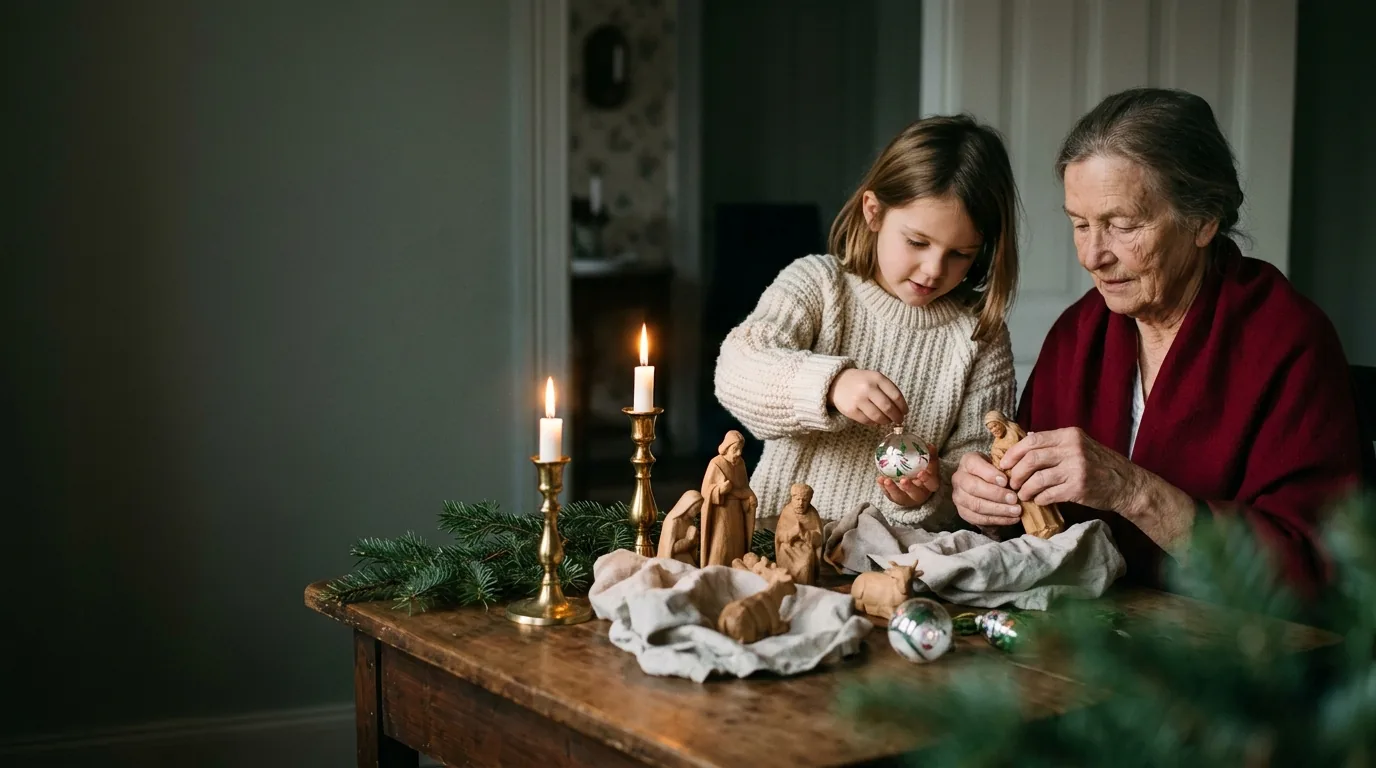
Grandmother and granddaughter unwrapping heirloom wooden nativity figures and glass ornaments from linen cloth by candlelight

Christmas Heritage & Cultural Essays

Source-verified guides to the history, dates, nativity craftsmanship, Three Kings, winter calendars, and classic art and literature.

History of Christmas

From fourth-century Roman calendars and medieval folk carols to nineteenth-century family customs.

Christmas (the Feast of the Nativity) marks the birth of Jesus of Nazareth in Christian tradition. First documented on December 25 in Rome in the Chronograph of 354 CE, the celebration gradually blended liturgical observances, winter solstice customs, regional gift-bearers, and nineteenth-century print culture into the varied traditions observed across continents today.


Read essay

Key Dates of the Festive Season

From Advent and St. Nicholas Day to Nochebuena, Boxing Day, Epiphany, and Candlemas.

Across cultures, the Christmas season spans weeks rather than a single day. Depending on region and church calendar, observances begin with Advent or St. Nicholas Day in early December and extend through Epiphany on January 6, Julian-calendar Christmas on January 7, or Candlemas on February 2.

Read essay

The First Nativity Scene & Cribs

How St. Francis of Assisi’s 1223 Greccio gathering inspired centuries of nativity craftsmanship.

From carved wooden Neapolitan presepi and Provençal santons to Andean retablos and Latin American pesebres, the nativity scene (nacimiento, belén, crèche, or Krippe) is one of Christmas’s oldest visual traditions, traced by medieval chronicles to Greccio, Italy, in 1223.

Read essay

The Three Kings & Epiphany

Historical origins, traditional names, parades, and January 6 gift-giving customs.

Celebrated on January 6 in Spain, Latin America, Puerto Rico, and much of Europe, Epiphany commemorates the visit of the Magi (Los Reyes Magos) to Bethlehem. Children leave shoes or grass-filled boxes for the travelers and their animals, while communities share ring-shaped cakes and illuminated parades.

Read essay

Orthodox Christmas & Hanukkah

Understanding Julian-calendar Nativity observances and the Jewish Festival of Lights.

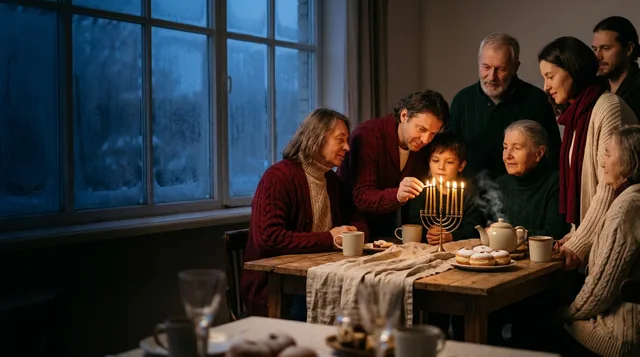
December and January bring multiple distinct religious and cultural observances around the world. Alongside Gregorian-calendar Christmas on December 25, millions of Eastern and Oriental Orthodox Christians observe Christmas on January 7, while Jewish communities celebrate the eight-day Festival of Lights, Hanukkah.

Read essay

Christmas in Fine Art & Classic Literature

Nativity masterpieces across European and Latin American galleries alongside enduring holiday tales.

From Renaissance Adorations and Spanish Golden Age canvases to twentieth-century Latin American social realism and nineteenth-century short stories, Christmas has inspired centuries of visual art and literature.

Read essay