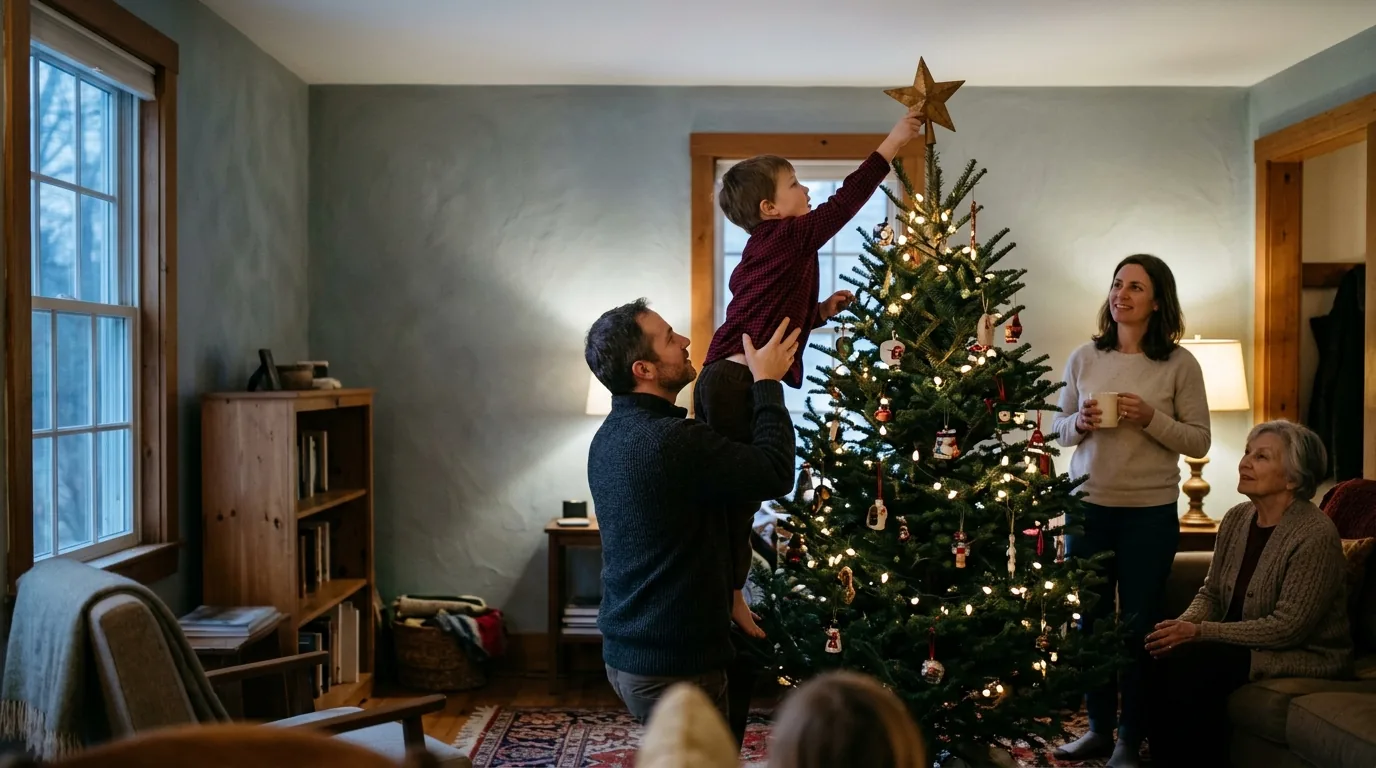
An American family in a New England living room lifting a young boy to place a gold star atop an evergreen tree

Northern winter

United States

From Southwestern farolitos to Southern Watch Night vigils and nineteenth-century parlor trees

Traditional greeting

Merry Christmas

English — MEH-ree KRIS-məs

Main celebration dates

December 24–25 (with season extending through New Year’s Eve Watch Night on December 31)

Region

North America

Cultural overview

Christmas in the United States evolved from early colonial divisions—when New England Puritans banned the holiday while Southern colonies feasted—into a federal holiday in 1870 shaped by literature, civic displays, and diverse regional customs.

Key traditions

December 24 and Advent evenings

Luminarias and Farolitos in the Southwest

Across New Mexico and the American Southwest, walkways, rooftops, and adobe walls glow with brown paper bags weighted with sand and lit by votive candles. North of Santa Fe they are commonly called “farolitos” (little lanterns), while “luminarias” refers to small piñon-wood bonfires; farther south, the paper lanterns themselves are called luminarias, rooted in Spanish colonial Las Posadas processions and Pueblo winter fire traditions.
December 31 into January 1

Watch Night (Freedom’s Eve)

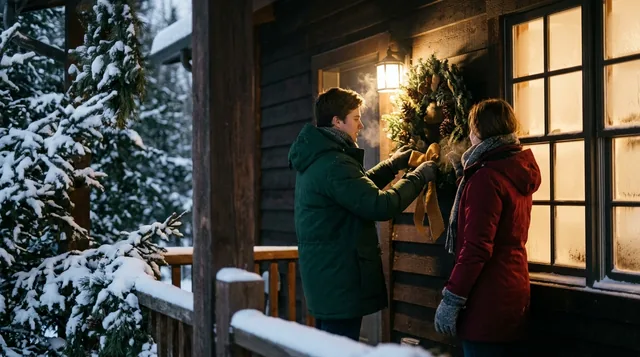
Tracing back to eighteenth-century Moravian and Methodist vigils, Watch Night took on deep historical meaning in African American and Gullah Geechee churches on December 31, 1862, when congregations gathered in prayer and song awaiting the Emancipation Proclamation at midnight. Today, churches across the South, Midwest, and major cities continue late-evening services of scripture, testimony, and spirituals.

December 24–25

Santa Claus, Stockings, and Evergreens

Nineteenth-century American literature and illustration—especially Clement Clarke Moore’s 1823 poem “A Visit from Saint Nicholas” and Thomas Nast’s Civil War-era drawings in Harper’s Weekly—blended Dutch Sinterklaas and German customs into the modern figure of Santa Claus. Families hang stockings by the hearth and decorate indoor evergreens, a practice popularized nationally in the mid-1800s.

Late November through December

Civic Tree Lightings and Neighborhood Displays

Urban centers and small towns alike mark the season with public tree-lighting ceremonies, parades, and neighborhood light displays. Landmark civic traditions include the National Christmas Tree lighting on the White House grounds, begun by President Calvin Coolidge in 1923, and New York City’s Rockefeller Center tree.

Festive table & foods

Roast Turkey, Ham, or Prime Rib

A centerpiece Christmas dinner featuring roasted poultry, glazed ham, or beef roast, served with regional sides such as cornbread dressing in the South, mashed potatoes, cranberry sauce, or Midwestern green bean casseroles.

Eggnog

A chilled, spiced dairy beverage made with milk, cream, sugar, and beaten eggs, often flavored with nutmeg and optionally brandy, rum, or bourbon. Colonial abundance of dairy and rum made it a staple of winter hospitality.

Sugar Cookies and Gingerbread

Cut-out butter and sugar cookies decorated with colored icing, alongside spiced gingerbread cookies and houses baked by families and left out on Christmas Eve.

Traditional holiday recipes

Cooked Spiced Eggnog

Custard-thickened milk and cream infused with cinnamon, nutmeg, and vanilla

View recipe

Verified sources

  1. Today in History - December 25 — Library of Congress · Primary / Institutional
  2. Luminaria Traditions — National Park Service · Primary / Institutional
  3. Watch Night — Encyclopaedia Britannica · Reference
  4. Christmas — Encyclopaedia Britannica · Reference

More in this region

See all regions
North America Northern winter

Canada

Merry Christmas / Joyeux Noël

Québec’s midnight Réveillon, Newfoundland mummering, and Indigenous winter solstice gatherings

Read guide