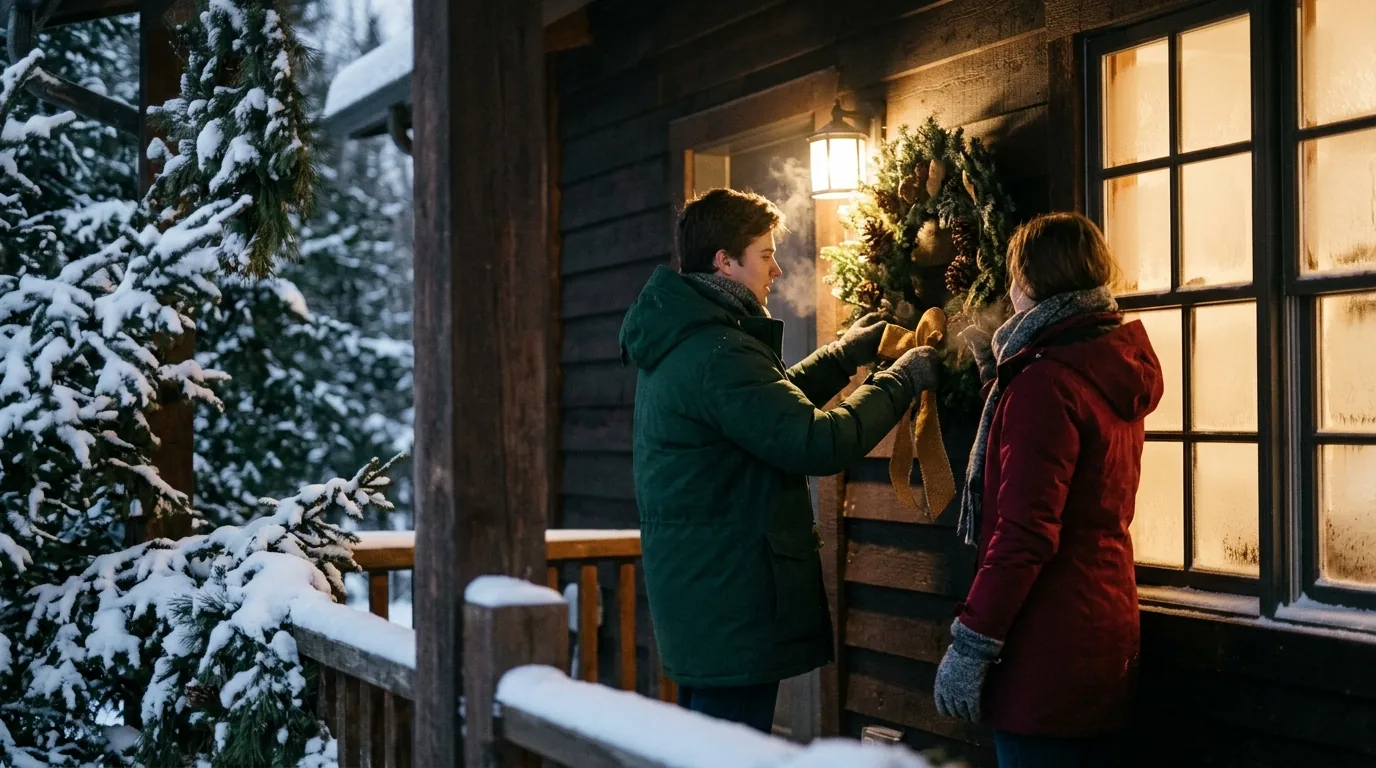
Two Canadian siblings in winter parkas hanging a cedar-and-pinecone wreath with a gold ribbon on a snowy timber porch

Northern winter

Canada

Québec’s midnight Réveillon, Newfoundland mummering, and Indigenous winter solstice gatherings

Traditional greeting

Merry Christmas / Joyeux Noël

English and French — MEH-ree KRIS-məs / zhwa-YUH noh-EL

Main celebration dates

December 21 (Winter Solstice) through December 26 (Boxing Day) and January 6

Region

North America

Cultural overview

Canadian Christmas traditions weave together French-Canadian heritage, British and Irish customs, Indigenous winter solstice observances, and multicultural celebrations across ten provinces and three territories.

Key traditions

Night of December 24 into December 25

Le Réveillon in Québec

Derived from the French word “réveil” (waking up), le réveillon is a festive family feast traditionally held after returning home from Christmas Eve Midnight Mass. Today many Québécois families gather earlier on December 24 around tables laden with tourtière, ragoût de pattes de cochons, and bûche de Noël.
December 26 through January 6 (Twelve Days of Christmas)

Mummering in Newfoundland and Labrador

Rooted in Irish and British folk customs and especially vibrant in Newfoundland outports, mummering (or “janny” visiting) sends neighbors out in eccentric disguises—mismatched coats, quilts, and masks—to knock on doors asking to be let in. Hosts offer music, refreshments, and try to guess each visitor’s identity before the masks come off.

Around December 21 and late December

Indigenous Winter Solstice and the Huron Carol

Long before European arrival, First Nations, Inuit, and Métis communities marked the Winter Solstice around December 21 as a season of renewal, community feasts, and oral storytelling. Around 1642, Jesuit missionary Jean de Brébeuf wrote “Jesous Ahatonhia” (The Huron Carol) in Wendat for the Huron-Wendat people, blending the nativity story with Indigenous winter imagery.

Late November through December

Multicultural Winter Festivals and Santa’s Postal Code

Across Canadian cities, communities pair Christmas with Hanukkah, Kwanzaa, and outdoor winter skating or light festivals. Canada Post also maintains the official postal code H0H 0H0 so volunteers can answer children’s letters to Santa Claus in dozens of languages.

Festive table & foods

Tourtière

A classic French-Canadian double-crusted meat pie seasoned with warm spices such as cinnamon and cloves. Standard versions use minced pork, beef, or veal, while the Saguenay–Lac-Saint-Jean style layers cubed meats and potatoes in a deep dish.

Bûche de Noël

A rolled sponge cake filled and frosted with buttercream to resemble a Yule log, served as a traditional dessert at the end of le réveillon.

Sucre à la Crème and Butter Tarts

Rich maple-or-brown-sugar cream fudge (“sucre à la crème”) in Québec alongside flaky pastry butter tarts filled with butter, sugar, and eggs across English-speaking Canada.

Traditional holiday recipes

Quebecois Tourtière

Spiced pork and potato meat pie baked in a flaky double crust

View recipe

Verified sources

  1. Christmas in Canada — The Canadian Encyclopedia · Reference
  2. Tourtière — The Canadian Encyclopedia · Reference
  3. Mumming — The Canadian Encyclopedia · Reference
  4. Huron Carol — The Canadian Encyclopedia · Reference

More in this region

See all regions
North America Northern winter

United States

Merry Christmas

From Southwestern farolitos to Southern Watch Night vigils and nineteenth-century parlor trees

Read guide