December 12 to December 24
Posadas and Nacimientos
Neighbors hold Posadas processions for twelve nights leading to Christmas Eve, while households construct expansive nacimientos with moss, colored sawdust, streams, and clay figures.
Northern winter
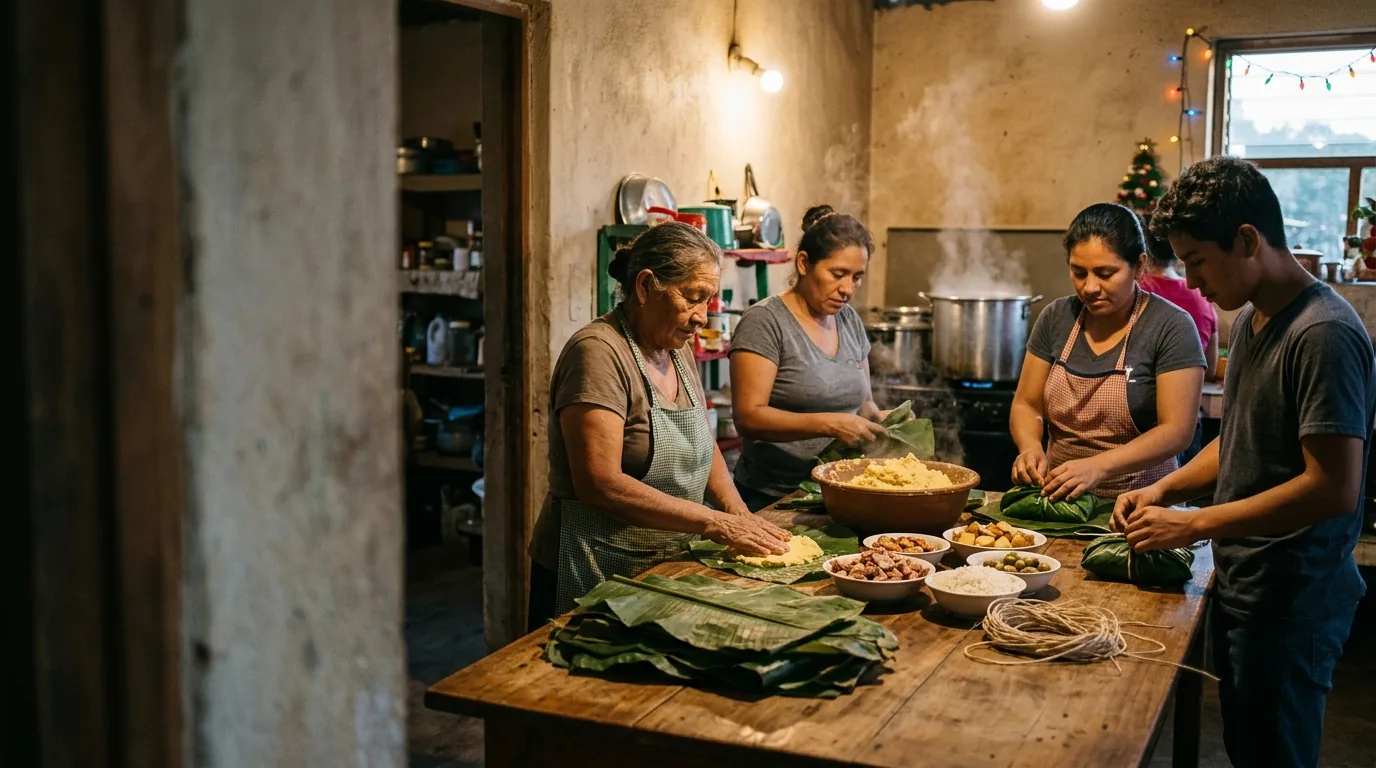
Detailed nacimientos, banana-leaf nacatamales, torrejas, and Año Viejo effigies
¡Feliz Navidad!
Spanish — feh-LEES nah-vee-DAHD
Mid-December (Las Posadas) through December 31 (Quema del Año Viejo)
Latin America & the Caribbean
Christmas and year-end celebrations in Honduras center on family gatherings, Posadas, and detailed household nacimientos. On Nochebuena, families share nacatamales, torrejas, and rompopo before closing the year on December 31 with the burning of the Año Viejo monigote.
Neighbors hold Posadas processions for twelve nights leading to Christmas Eve, while households construct expansive nacimientos with moss, colored sawdust, streams, and clay figures.
Families attend church services and gather at home until midnight to place the infant Jesus figure in the nacimiento, exchange wishes, and share dinner.
Communities craft a life-sized stuffed effigy called a monigote or Año Viejo—often satirizing public events—and burn it at midnight with firecrackers to leave the past year behind.
Large corn-masa tamales filled with pork or chicken, rice, potatoes, peas, olives, and raisins, wrapped in banana leaves and boiled in big batches.
Fried egg-battered bread soaked in spiced panela syrup, served alongside chilled rompopo made from milk, egg yolks, sugar, cinnamon, and rum or aguardiente.
Egg-battered fried bread soaked in warm rapadura syrup spiced with cinnamon, cloves, and allspice
¡Feliz Navidad!
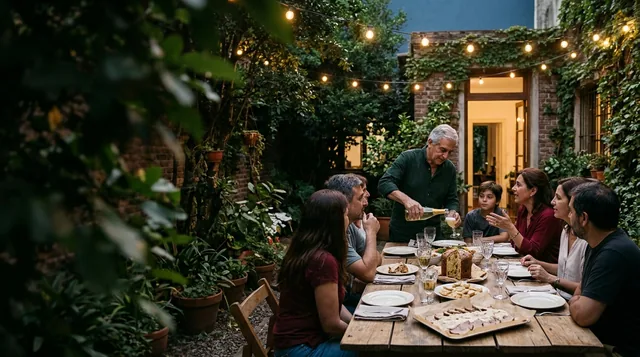
Summer Nochebuena tables with chilled vitel toné, asado, and pan dulce
¡Feliz Navidad!
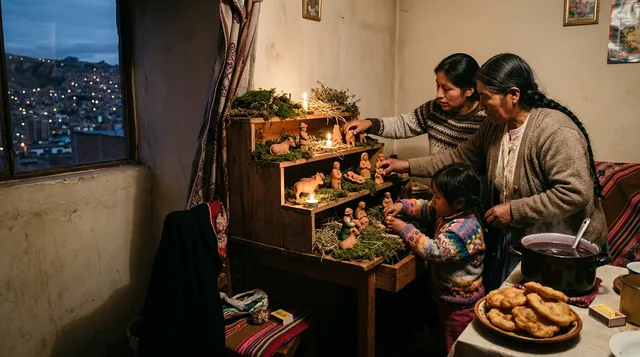
Midnight picana stew, Sucre Niño Jesús processions, and Andean nativity displays
Feliz Natal!
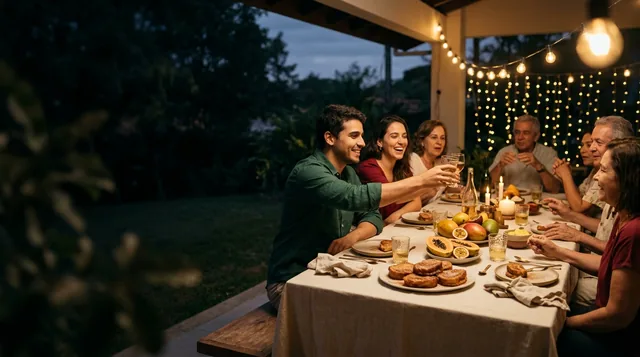
Summer midnight Ceia de Natal, Papai Noel, and Folia de Reis processions