Night of December 24
Le Réveillon de Noël
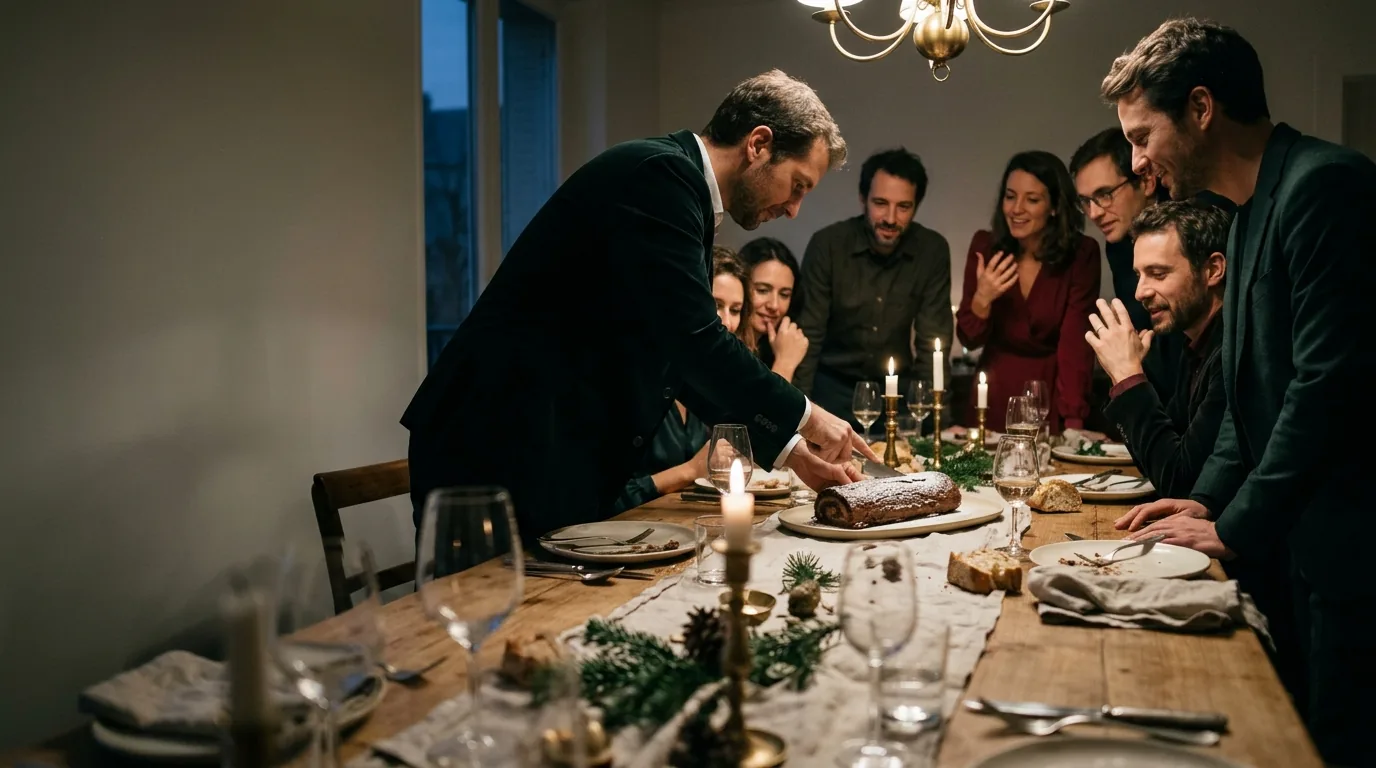
Following or preceding Midnight Mass, families sit down to a long, celebratory Christmas Eve banquet featuring seafood, roasted poultry, and regional delicacies.
Northern winter
Late-night Réveillon banquets, Bûche de Noël pastries, and shoes left for Père Noël
Joyeux Noël
French — zhwa-yuh noh-EL
December 6–25 (Saint-Nicolas in eastern regions on December 6; Réveillon on December 24; Noël on December 25)
Western & Alpine Europe
Christmas in France (Noël) places gastronomy, regional folklore, and family hospitality at the center of the season. On Christmas Eve, families gather for le Réveillon, a multi-course feast concluding with the Yule-log cake Bûche de Noël, while children leave their shoes near the hearth or tree for Père Noël.
Following or preceding Midnight Mass, families sit down to a long, celebratory Christmas Eve banquet featuring seafood, roasted poultry, and regional delicacies.
Instead of hanging stockings, children place their shoes or slippers by the fireplace or under the Christmas tree so Père Noël can fill them with small gifts and sweets.
Eastern cities such as Strasbourg hold centuries-old Christmas markets (Christkindelsmärik), while southern Provence maintains nativity figurines (santons) and the Gros Souper tradition.
A rolled sponge cake (génoise) filled and frosted with chocolate, coffee, or chestnut buttercream textured like tree bark, recalling the old winter solstice hearth log.
Classic Christmas Eve courses pair chilled oysters and smoked salmon with foie gras, escargots, or roast poultry stuffed with chestnuts.
Classic French rolled sponge cake filled with espresso mascarpone cream and dark chocolate bark ganache
Frohe Weihnachten
Alpine Krampus runs, the angelic Christkind, and the birthplace of Silent Night
Frohe Weihnachten
Advent wreaths, historic winter markets, and candlelit Christmas Eve gift-giving
Vrolijk Kerstfeest / Prettige Kerstdagen
Sinterklaas Eve poems, spiced pepernoten, and two cozy days of Kerstmis